
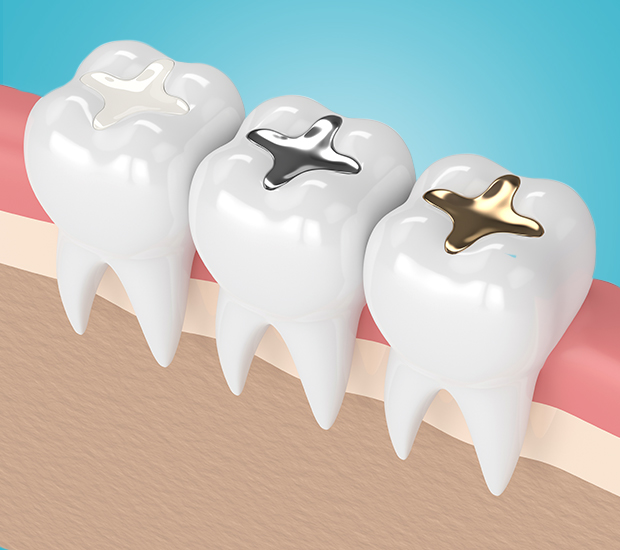
Today, there are many options for tooth fillings. Composite or tooth-colored fillings offer a durable and more natural look that may be preferable to a traditional silver metal filling. Since this type of filling matches the color of your teeth, you can use it to fix several different issues on both the front and back teeth.
A tooth-colored filling can help improve your smile. Composite fillings are available at Oak Tree Dental in Poway and the surrounding area. Call us today at (858) 748-2101 to learn more about our services or to schedule an appointment.
Understanding composite fillings
Composite fillings consist of a tooth-colored resin composed of plastic and some additives. In some cases, there are also glass particles mixed with the plastic. Although mostly used for treating cavities, a composite filling can also improve a tooth's cosmetic appearance, such as reshaping a tooth.
Other common types of fillings include gold, porcelain, and silver amalgam. Compared to composite fillings, metal fillings are significantly more visible in the mouth. While porcelain fillings are closer to the surrounding teeth in color, they can be quite costly. For many patients, composite fillings offer a balance of aesthetics, affordability, and durability.
“For many patients, composite fillings offer a balance of aesthetics, affordability, and durability.”
Benefits of composite tooth fillings
If a patient has tooth decay, a composite filling may be the solution. According to one National Institute of Health survey, 92% of adults between ages 20 and 64 have tooth decay. There are various benefits of composite fillings, including:
- Fix Decay and Other Issues: Composite fillings primarily fix tooth decay. They can also fix cracks, chips, and tooth wear. This helps to restore a tooth’s function and health.
- Subtle Aesthetics: Compared to other filling types, composite fillings are very subtle. Our dentist can color match the filling to the surrounding teeth. Many patients prefer this natural appearance.
- Strong Bonding to Teeth: Composite fillings bond well with the treated tooth. It can help to strengthen and support the remaining natural tooth. This filling provides support to prevent or slow the worsening of further tooth damage.
- Minimal Drilling Needed: Relative to other filling types, especially silver amalgam, composite filling requires little drilling. These fillings can fit into small cavity spaces. This results in patients keeping more of their natural teeth.
“According to one National Institute of Health survey, 92% of adults between ages 20 and 64 have tooth decay.”
Other types of fillings
Although composite fillings are the most popular type of filling, they are not always the right choice for every patient. Some people may have a specific aesthetic preference for a different kind of filling. For example, although tooth-colored fillings are more subtle, some people prefer the appearance of gold fillings. Additionally, gold and porcelain fillings are more durable than composite fillings. They may last 10 or more years longer than composite filling material. Silver amalgam may also last about five years longer than a composite filling.
According to the American Dental Association, composite fillings can also take longer to place than other types of fillings. Compared to silver amalgam, a composite filling can be more expensive. However, this may depend on insurance coverage. However, it is less costly than gold and porcelain filling. Patients should discuss the benefits and drawbacks of each option with our dentist before making a decision.
“Although composite fillings are the most popular type of filling, they are not always the right choice for every patient.”
Check out what others are saying about our dental services on Google: Composite Fillings in Poway, CA
 Check out what others are saying about our dental services on Google:
 When a filling is necessary
Various situations may call for a filling. The most common is tooth decay. Typically, a filling is the least invasive procedure for correcting decay. People who have teeth with cracks, chips, and wear can also choose to have a filling to restore teeth. In some cases, a filling can also fill small holes formed for reasons other than tooth decay. Dentists sometimes offer procedures to correct discoloration or misshapen teeth for cosmetic-only purposes.
Patients of all ages can have situations that require a filling. However, these situations are less common for children who do not yet have their permanent teeth. According to the previously mentioned National Institute of Health survey, 85% of adults have at least one filling before 34. The probability of needing a filling can also vary significantly depending on oral hygiene practices.
“Patients of all ages can have situations that require a filling.”
Questions answered on this page
Q. What are composite fillings?
Q. What are the benefits of composite fillings?
Q. What are some potential disadvantages of composite fillings?
Q. Who should get tooth fillings?
People also ask
Q. Why does the dentist use fluoride mouthwash in the cleaning?
Q. Why is preventative care important?
Q. What is the importance of having a routine dental checkup?
Cost considerations
Composite fillings typically cost more than silver amalgam but less than other options. In most cases, tooth fillings are covered by insurance as they are deemed essential health care treatments. We recommend reaching out to an insurance provider to determine whether there are any co-pays involved.
When considering the different types of fillings, insurance providers can assess what a patient's plan covers. Our staff can work to find the best solution that fits a patient's budget.
“Composite fillings typically cost more than silver amalgam but less than other options.”
Frequently asked questions
Compared to a traditional silver filling, a composite filling takes about 10-20 minutes longer to put into place. That depends on the size and location of the filling. You should expect to be in the dental chair for at least an hour.
One of the major advantages of a tooth-colored filling is its ability to be matched to the same shade as your teeth. This provides a seamless look. Similar to other types of fillings, a composite filling also protects your tooth from further decay.
Composite fillings comprise resin material that contains no metal. Instead, it is a mixture of powdered glass, silica, or other ceramic particles and plastic compounds. That makes it a good option for people who have metal allergies or want to avoid metal fillings.
Composite fillings, like most other fillings, are typically covered by insurance as they are considered essential restorative procedures. However, we always recommend patients contact their insurance providers to determine any out-of-pocket costs before starting any treatment. We can also discuss any payment information during your consultation.
On average, a composite filling lasts around seven years. However, newer research has shown they can last for a decade or more if the filling is smaller and good oral hygiene practices get followed. Making regular trips to the dentist will help ensure your tooth-colored filling lasts as long as possible.
Dental terminology
Cosmetic dentistry is generally used to refer to any dental work that improves the appearance (though not necessarily the function) of a person’s teeth, gums and/or bite.
Tooth decay is when the enamel of the tooth begins to decay and cause erosion from plaque and tartar on the teeth.
Dental caries are also known as cavities and result from a lack of proper oral hygiene leaving plaque that forms tiny holes in the teeth.
A dental checkup is an appointment that involves cleaning the teeth, identifying any signs of infection and removing said signs of infection at least once every six months in the office.
A dental filling involves restoring the structure of the tooth by using metal, alloy, porcelain or plastic to fill the tooth.
A dental prophylaxis is a professional and detailed cleaning that involves the removal of plaque, calculus and stains from the teeth.
Dental sealants contain a resinous material that we apply to the chewing surfaces of the posterior teeth to prevent dental caries.
A dentist, also known as a dental surgeon, is a doctor who specializes in the diagnosis, prevention, and treatment of diseases and conditions of the oral cavity.
Gingivitis is the inflammation of gum tissue that results from plaque, other infections in the mouth and poor oral hygiene.
Preventive dentistry is the dentistry that focuses on maintaining oral health in order to prevent the spread of plaque, the formation of tartar and infections in the mouth.
Call us today
If you have a tooth that requires a filling, do not hesitate to seek treatment. Our team at Oak Tree Dental can help. Call us today at (858) 748-2101 to learn more about our services or schedule an appointment.
Individual results vary. How long a treatment lasts, and how it looks and feels, depends on each patient.