
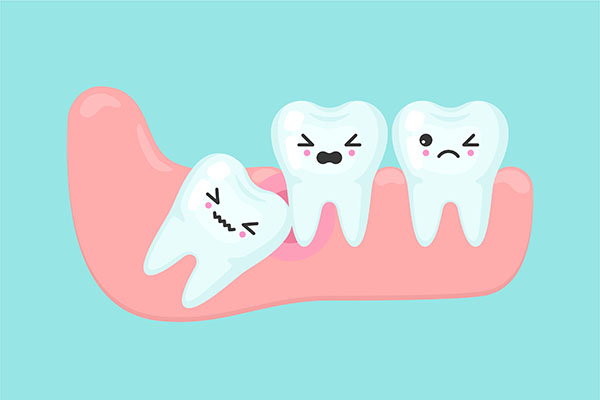
 Finding out that you may have a cyst near a wisdom tooth can be worrying, and the word itself sounds alarming. This page gives general information about how a cyst can form around a wisdom tooth, the signs that may point to one and what your dentist does about it. It is not a diagnosis. Only a dentist who examines your mouth and reviews your X-rays can tell you what is happening in yours.
What a cyst around a wisdom tooth is
A cyst is a sac that fills with fluid. Around an impacted wisdom tooth, one can form in the soft tissue that surrounds the crown of the tooth under the gum. A wisdom tooth is impacted when it is stuck under the gum or against the bone and cannot come in properly. A cyst of this kind is often called a dentigerous cyst. Dental guidance describes it as one of the more common cysts found in the jaw.
Why a cyst forms
The exact cause is not always clear. A cyst tends to develop around a tooth that has not come through the gum, because the tissue that surrounds the unerupted tooth can fill with fluid. Wisdom teeth are often involved because they are the teeth most likely to become impacted. Having an impacted wisdom tooth does not mean you will get a cyst. Most do not.
Signs to watch for
Many cysts cause no symptoms at all and are found on an X-ray taken for another reason. When there are signs, they can include:
- Swelling that spreads along the back of the gum or jaw
- Tenderness or an ache in the jaw
- A neighboring tooth that has shifted or feels loose
- A gum that looks red, puffy or stretched near the wisdom tooth
- A bad taste or discharge if the area becomes infected
- A wisdom tooth that never seems to come in
None of these signs proves a cyst. Gum infections, decay and impaction can cause similar symptoms, which is why an exam is needed.
How a cyst is found
Because a cyst forms below the gum, it is usually found on an X-ray. Your dentist looks at the position of the wisdom tooth and checks the bone around it. A dark, rounded area around the crown of an impacted tooth can raise the question of a cyst. Your dentist then explains what they see, whether more tests are needed and what your options are.
Why it matters
A cyst can slowly grow. If it grows, it can affect the bone around the tooth and may push on neighboring teeth. That is one reason dentists look carefully at impacted wisdom teeth on X-rays, even when you have no pain. It is also why it is worth asking about any swelling or change you notice in the back of your jaw.
How it is approached
Treatment depends on the size and position of the cyst and on your own health, and only your dentist can say what suits you. Published guidance describes removing the impacted tooth as part of the usual approach, along with dealing with the cyst. Your dentist explains the plan, what it involves and what to expect, and answers your questions before you decide.
Follow-up visits and X-rays may be part of care. Please ask your dentist what applies to you.
What to do if you notice a change
If you notice swelling, tenderness or a change at the back of your jaw:
- Do not wait for the symptoms to go away on their own
- Mention it to your dentist at the next visit, or call sooner if the swelling grows
- Keep up with your checkups and X-rays, since many cysts are found there
For pain relief, ask your dentist or pharmacist what suits you.
Comfort at your visit
If you feel nervous about an exam or a procedure, tell your team. Our comfort options range from numbing gel to sedation, and your dentist chooses with you the option that suits your needs and your visit.
Questions people ask
Is a cyst around a wisdom tooth common?
Dental guidance describes this type of cyst as one of the more common ones found around teeth that have not come through. Most impacted wisdom teeth do not develop one.
Can I have a cyst without any symptoms?
Yes. Many are found on an X-ray before they cause any signs. That is a good reason to keep up with checkups.
Does a cyst around a wisdom tooth go away on its own?
A cyst is a physical change around the tooth, and it usually needs a dentist to assess it. Your dentist tells you what to expect for yours.
Does every impacted wisdom tooth need to be removed?
No. Some are monitored at routine visits. Your dentist explains the reasons for removal in each case, and you can read more in why wisdom teeth may need to be removed.
Is a cyst the same as a wisdom tooth infection?
No, but they can occur together. An infection can cause swelling and pain and needs prompt attention. Read about the signs in our post on wisdom tooth pain.
What if the swelling keeps getting worse?
Call us. We answer emergency calls at any time, and we offer same-day emergency appointments. If swelling spreads, or you have trouble swallowing or breathing, call 911 or go to an emergency room.
Talk to us about your wisdom teeth
If an X-ray has shown a change near a wisdom tooth, or you have noticed swelling at the back of your jaw, our team is glad to talk it through. We remove wisdom teeth at our office, and our team includes a periodontist and an oral surgeon who treat patients at our Poway office. Read about wisdom teeth extraction, then call (858) 748-2101 or request an appointment.
Source: National Library of Medicine.
Check out what others are saying about our dental services on Google: Wisdom Teeth Extraction in Poway, CA
 Check out what others are saying about our dental services on Google:
Individual results vary. How long a treatment lasts, and how it looks and feels, depends on each patient.